-
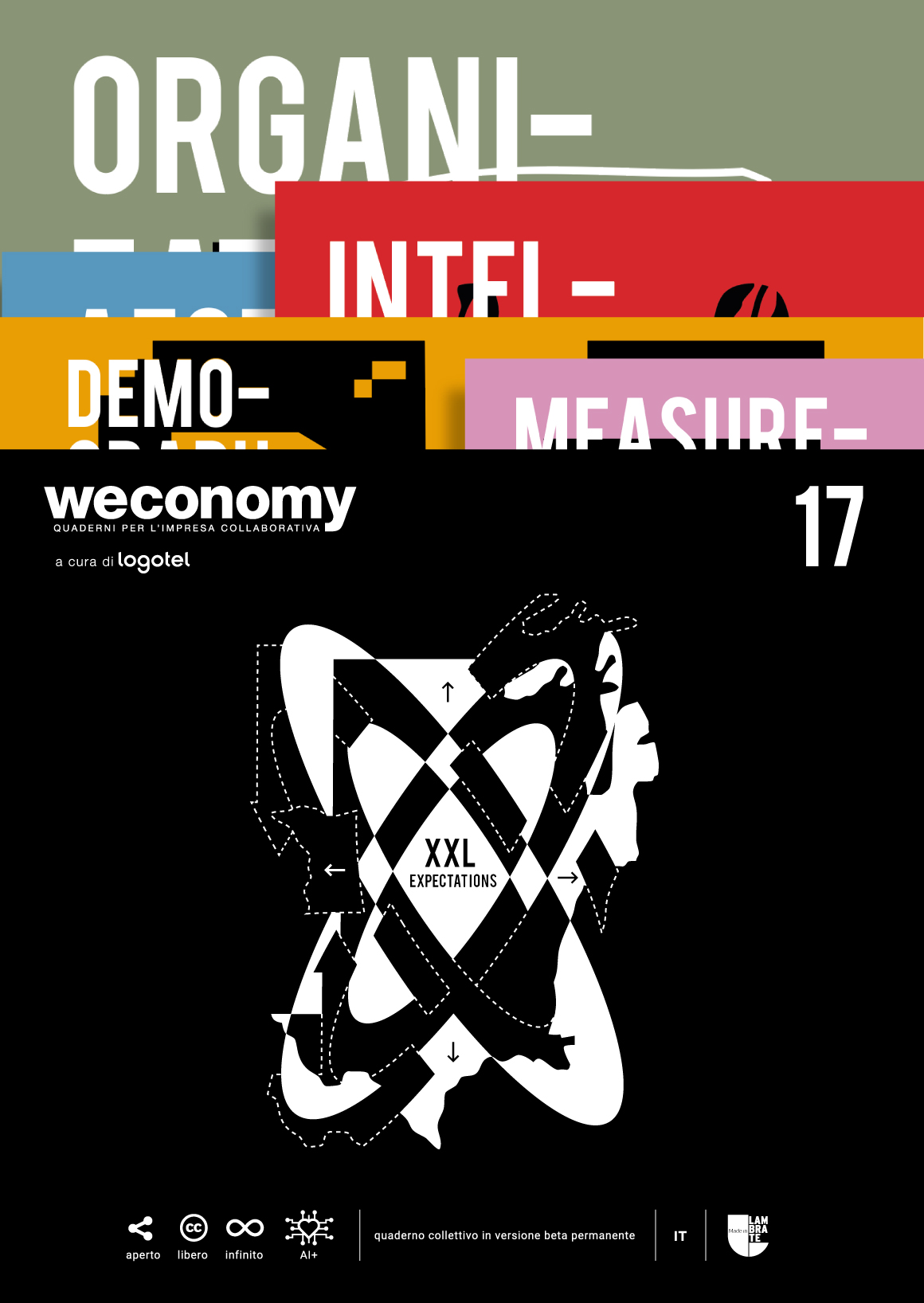
XXL Expectations. Value Pathways in a Fragmented World
Weconomy 17 is not a linear journey; it is an ecosystem of connections. Across five domains – demographics, organizations, aesthetics, intelligences, and measurements – we gather fragments, perspectives, and practices to understand XXL expectations and translate them into micro-experiments, meaningful connections, and new metrics for change.
-
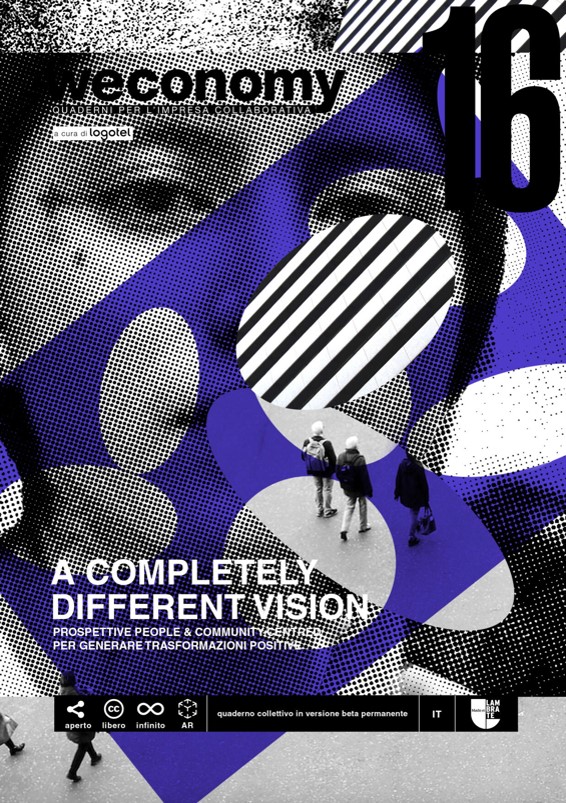
A Completely Different Vision
Transformative communities are living organisms that exist in hybrid spaces. They are multidimensional and porous, always in motion and shaped by experiences that spark exchange and generate transformative action. By placing these communities at the centre, alongside the individuals who inhabit them, we can take on the major challenges of the present and the future and create positive impact.
-
UFO. Unidentified Future Organizations
Organizations have become UFOs – unidentified objects in transformation. Today we have the chance to imagine a desirable future for this new kind of business: hybrid, distributed enterprises. Starting from a new ecosystem of relationships and from meaningful ties between people, places, and communities.
-
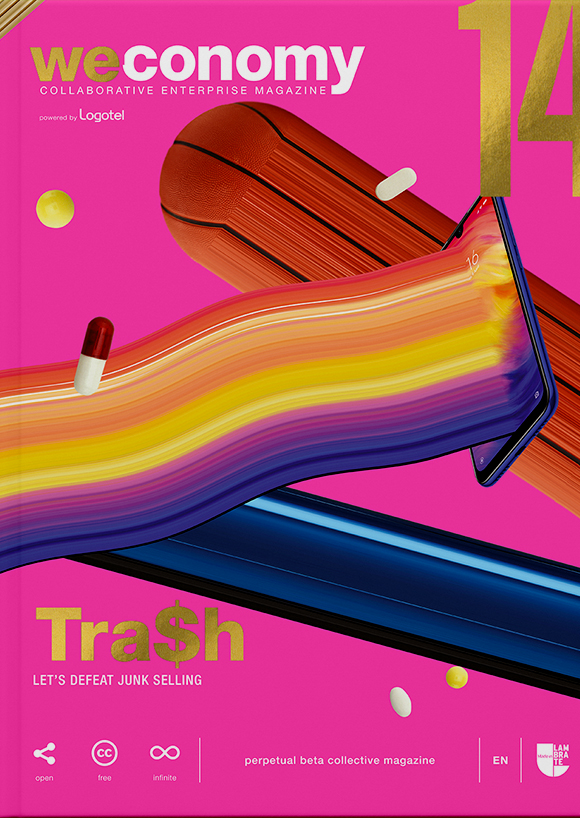
Trash, Let's Defeat Junk Selling
In this Notebook, we investigate the origins of “trash” – which, for us, stem from a kind of selling that fails to solve real, concrete problems. The antidote is a circular, continuous approach to sales, one that maximizes value by multiplying touchpoints with the customer, engaging them, and building a shared vision between people and organizations.
-
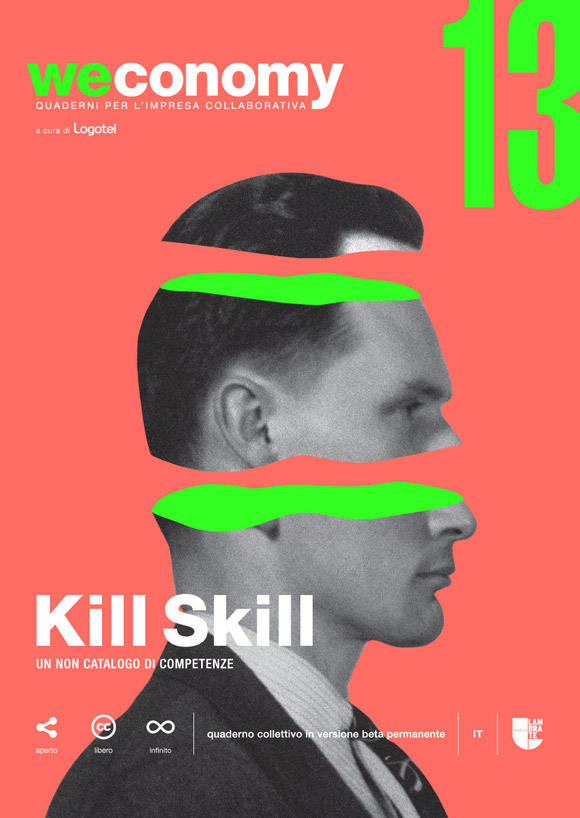
Kill Skill. A non-catalogue of skills
There are no "future-proof" skills. Because when we talk about abilities and competencies, we're actually talking about people development. In this issue, we've addressed the topic of skills from a systemic perspective, to explore what inspires and motivates learning, practicing new behaviors, and triggers evolutionary pathways that connect people and organizations.
-
Robot: Is Automation Collaborative?
R as in Robot – What relationships are possible between humans and technology? The theme is explored in two sections that examine transformations on both a social and a business level. A section dedicated to the Posthuman exhibition – held during MDW 2017 – closes the Notebook. The aim of this issue is to offer insights, spark a dialogue, and encourage further exploration of different points of view.
-
Quid novi? Generations That Collaborate
Q as in Quid Novi – Generations that collaborate. Issue 11 of Weconomy explores how different generations – with distinct mindsets – share places, time and spaces, and the changes this coexistence brings. Contributors span ages, skills and professions to ensure a genuinely plural perspective. Because cross-generational collaboration is an opportunity.
-
POP Collaboration: Point Of Presence
P as in P.O.P. Collaboration. The tenth Notebook describes the spectrum of meanings the “self” takes on in collaborative processes. Twelve authors from different backgrounds reflect on the role of the individual who reprograms and transforms (Hyperself), and who collaborates in a widespread and spontaneous way, aware of the role of the other selves involved (Integrated Self). The self as the fundamental particle of collaboration.
-
Oops, Or, Ok: The Paradox of Continual Choice
O as in OOPS, OR, OK. Notebook 9 investigates the paradox of continuous choice: among the 14 authors exploring the themes of “decision-making,” we find an astronaut, a doctor, a designer, a community manager – people working in contexts undergoing rapid change. Because when faced with choices and options, the only truly wrong choice is not choosing.
-
Ne(x)twork: flow, amplified identity, common environment
N as in Ne(x)twork, a neologism that plays on the words next, work, and network. Notebook 8 is dedicated to the future of work and to the need for it to be continuously connected and shared. A kind of sharing that leads to the creation of Flow – a stream the collaborative enterprise needs to be able to steer, coordinate, stimulate, and, when necessary, adjust along the way.
-
Management: Cross, Self, Content
M as in Management. The seventh Notebook explores the shifting dynamics and changes shaping the world of Management: a three-act narrative of how connections between different worlds (Cross), a propensity for coordinated self-organization (SELF), and a focus on content as part of the offer (Content) represent the three distinct dimensions through which the collaborative enterprise develops.
-
Local: Talent, Community, Making
L as in Local. An opportunity to reflect on and act within (and from) the collaborative dimension as a combination of Talent, Community, and Making. With an insert dedicated to the fourth dimension – Time – with Timescapes.
-
Info, Indie, Inter: Renewing Innovation
I as in Innovation, first and foremost a matter of values (and of value). And innovating content (Info), innovating attitude (Indie), innovating relationships (Inter) are three possible value choices for businesses.
-
HR: Human (R)evolution
The “Business Revolution” that places the individual at the center of its future. A revolution that transforms the human being from a resource into an “athlete, acrobat, artisan.”
-
Empowerment, Feedback, Gamification: c’era una volta il Retail
Is it here, and above all, will it still be? It’s the focus of this third Notebook, explored through three key words: Empowerment, Feedback, Gamification – fundamental aspects of collaborative retail.
-
Design: (Re)shaping Business
D as in Design – open, social, and collaborative – at the service of business to (re)shape how it creates value. A publication that gathers and develops insights and contributions that emerged during the Making Together event.
-
Auto, Beta, Co: (Re)writing the Future
A notebook devoted to the opening letters of the alphabet of collaborative enterprise: A for Auto, B for Beta, C for Co. Because collaboration is not just a necessity—it only works when it is driven by purpose and grounded in shared meaning.
-
Weconomy. The Economy Restarts from “We”
The first building block that launched the Weconomy project. Weconomy. The Economy Starts with We explores the paradigms and opportunities of a “We” economy – more open, more participatory and more transparent, built on sharing, reputation and collaboration. Through a mash-up of international contributions and the involvement of over 40 co-authors, the Weconomy book becomes a reservoir of energy, ideas, theories, stories, practices and tools centered on collective talent. An informal incubator, open to everyone, designed to imagine, create and keep innovating the future of the economy.
Magazines
Weconomy rewrites the vocabulary of collaborative business. From A to Z, it explores the ideas, themes, and challenges that define and expand the boundaries of the WE economy. This section brings together all the notebooks and collections that compile the content developed for the Making Weconomy series.