In this section of Weconomy 17, we engage with the role of beauty as a social adhesive and a generative force within contemporary practices and expectations. At a time when experiences, services, and interactions often feel demanding, opaque, and standardized, beauty is re-emerging as a deep need and a shared desire, one that can attract, connect, and create meaning. It is not a superficial aesthetic feature, but a relational event: an unexpected encounter between people and reality that reshapes perception, horizons, and meaning. Beauty, as a form of “augmented reality,” prompts action, motivates engagement, and generates new forms of coherence and collective creativity. In an environment shaped by increasingly uniform codes, it becomes a space of authenticity, freedom, and regeneration, where the human capacity to surprise, invent, and imagine can still thrive.
Perhaps we are simply tired of dealing with practices, experiences, services, communications, products, and content that feel hard, difficult, even off-putting. Too often, “effort” or “sacrifice” are the only words left to describe the energy required to produce something – or even just to experience it. In the near future, until we truly learn how to master generative AI, we risk adding to this growing sameness. And yet, among the enduring expectations of our work is the ambition to create something attractive, something engaging. Something beautiful.
Can we say that what people expect most is beauty rather than utility? Is that too much? Does it sound naïve? Perhaps – and yet…
Expectation is not a fantasy about the future; it is a possibility that emerges from real facts and concrete experiences. This issue of Weconomy is, first and foremost, a collection of such facts – of “emergences”: people, communities, ideas that rise to the surface. But an expectation is not just a possibility; it is a desired one. It speaks not only of anticipation, but of satisfaction and pleasure – perhaps also of disorientation, of détournement, but ultimately of attraction. An attractive possibility. In other words, a beautiful one.
Beauty has always been a fundamental human and collective need: a force that drives action and inspires new projects.
It is not an ornament, but the engine of an encounter that changes things – and changes us. Projects should create shifts in state and perception, and allow for moments of disruption: something that cannot be fully planned. When beauty disrupts, it frees the imagination and opens space for new behaviours, gestures, and forms of relationship. What is beautiful draws people in: it invites, attracts, suggests, connects. In short, it moves people toward something. The experience of beauty is the experience of an encounter – sometimes accidental – between something (or someone) and me (or us).
What is beautiful speaks. It uses a language that feels at once intelligible and excessive. For this reason, beauty commits us to follow it – not only to enjoy it emotionally, but to understand it, extend it, and grasp its further possibilities. Because when something beautiful happens, it is never just an emotion, or a psychological or psycho-physical state of wellbeing. It is being drawn into the midst of something that has a new order and a new meaning, and therefore opens up new possibilities – promising something more. Beauty is the sudden appearance of a kind of excess in reality. The effect of that appearance can vary – from fear to a radiant, overwhelming joy.
But when beauty occurs, it is not only our reaction that matters. Beyond pleasing the senses, what is beautiful unexpectedly reshapes our perception. It expands our boundaries and redefines our sense of order or suggests an entirely different one from the one we had assumed. Beauty is a mysterious force that ordinary things suddenly begin to radiate. Beauty moves us to act, wrote Dostoevsky: “surrounded by beautiful things, we are compelled to act. Our calm is broken.”
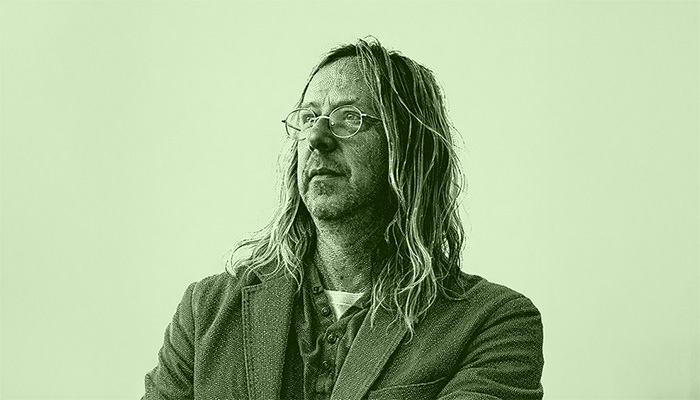
Beauty – as we have said – is a need that moves people to act, and is therefore an experience that can be designed. At its core, it is an encounter between something (or someone) and me (or us). It can be designed, but not programmed: we can create the conditions for the encounter to happen, but we cannot predict if – or how – it will take shape. As Alessandro Rancati emphasizes, beauty – “understood as a relational quality and a form of emergent coherence, rather than as superficial aesthetics” – acts as a social glue: it gathers people, draws them in, and brings them into relation.
Living relationships can give rise to new expressive forms, original codes, and new design languages, in a context where – as Grant also points out – not only content is becoming standardized, but forms themselves. The Internet was once described as a platform that would guarantee a future of uninterrupted originality – and yet… Today, what we need is a renewed aesthetic courage: a willingness to experiment with language, to read emergent signals, and to turn them into new practices of meaning. We need to dare – to do more than merely connect or tweak. New aesthetic codes are emerging from new, personal mediations with reality, giving rise to design artifacts and new forms of expression. All of this happens wherever action remains stubbornly human and authentic – perhaps in the interstices of increasingly standardized practices, despite every supposed personalization.
We therefore need to ask what we want from design today: do we want a standardized answer – according to standardized codes, patterns, languages, and channels – or do we want design to return to being a laboratory for emergent languages, a place where new sensibilities take shape? We know very well that one can believe oneself to be tailored to the most particular individuality, and yet replicate perfectly common – perhaps even banal – grids.
That is why personalization is no longer a guarantee of a result that is truly attractive or impactful. Here aesthetics and design intertwine. Aesthetics are the languages through which a culture expresses its idea of beauty; design is the act that translates those languages into concrete experiences, able to interpret emergent signals and transform them into forms of life.
Aesthetics orient design by providing sensibility and meaning, while design renews aesthetics by creating new ways of seeing, feeling, and relating.
Beauty is the experience; aesthetics is the language that makes it shareable; design is the practice that sets it in circulation, building bridges between imagination and reality – between what appears and what becomes possible.
There is always a mediation with things that we must accept, day by day. And above all, we must welcome displacements, deviations, generational crossings – those moments when beauty surprises us again, finally outside the usual communication and predictable storytelling. Many of these displacements are suggested by the facts narrated in this issue: it is only a matter of not trapping them.
Of letting them be.