
For the Digital Future, Let’s Return to Matter
The Internet’s emancipatory promise may be “dead,” yet it lingers as a ghost within platforms and algorithms. From the fediverse to the hard materiality of hardware and the resource-intensive footprint of AI, the piece examines a post-digital landscape shaped by political tensions and digital militarization.


Aesthetics of Diversity and Sharing: Reclaiming Design’s Capacity for Change
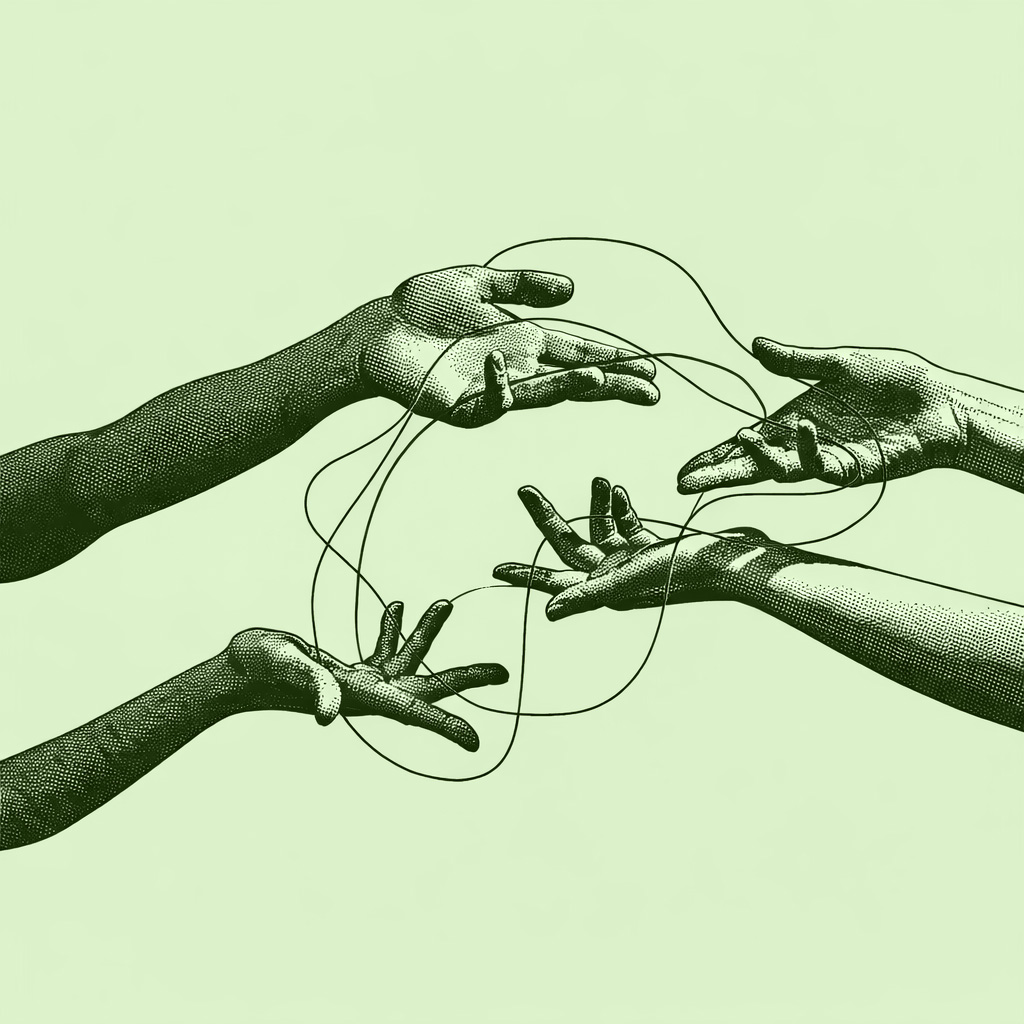
Question the assumption that there are no real alternatives to branding, a dehumanising ideology that colonises even the non-profit world. Post-branding argues for transparency, open-source principles, and participatory practice. As AI concentrates on the predictable, design’s distinctly human task is to build connections that can still generate change.

Expectations and Aesthetics: Beauty as Social Glue
In Weconomy 17, beauty returns as a collective need and a form of social glue: not an ornament, but a relational encounter that disrupts, resets perception, and prompts action. In an increasingly standardised world (standardised by AI as well) aesthetics and design become a laboratory for new, authentic, shared languages.<br>


Le Monde (des Affaires) Diplomatique: Is Diplomacy the Only Path Forward?
Geopolitics is moving into the heart of business: it is no longer a topic for specialists. With overlapping crises and the emergence of new blocs, companies must read markets, regulation, and consumption as political signals. When the big players clash, smaller ones pay the price. What’s needed is a “diplomatic” company – able to adapt, understand different cultures, and build collaboration.

(Eco)systemic Management. Navigating Through Experimentation. Destination? Beauty
Is the world really more complex, or have we made it complicated by chasing certainty? Removing our “lenses” and moving through confusion is part of the transition. Navigation happens through listening and sense-making – experiences, micro-narratives, maps – followed by field experiments and learning from unintended outcomes. To avoid sliding into chaos, values are needed as a compass. In the New European Bauhaus, beauty – together with sustainability and inclusion – is understood as an emergent, relational quality that helps orient action.


When AI opens creative paths and generates new value. Here’s what we can learn from the Global South
AI is not only a technological matter, but a social one: trust, authenticity, and the redistribution of value. In the West, a defensive approach prevails, shaped by fear, regulation, and control. From the Global South, instead, comes a pragmatic optimism: using models to tackle real problems in education, mobility, and public services.