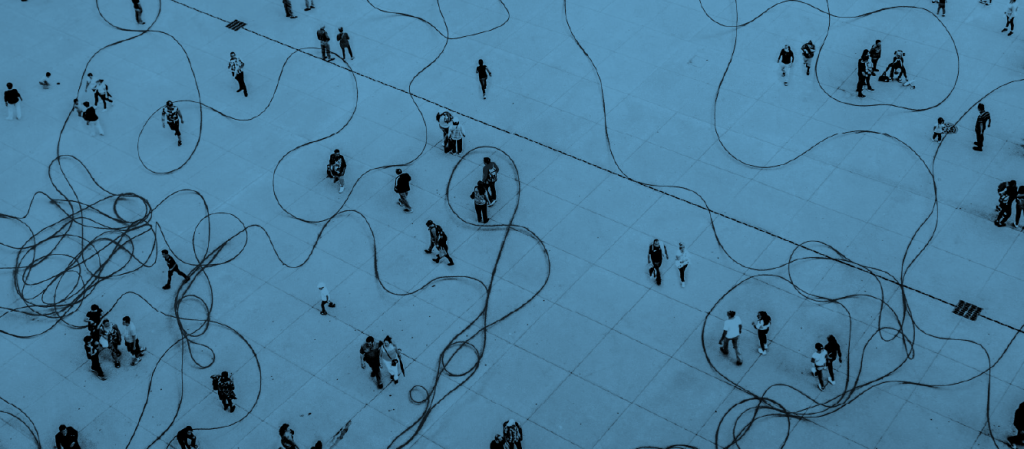
A largely overlooked element in organizational scholarship – and often ignored in managerial practice as well – is the context in which organizational action takes place: the setting where things actually happen. The issue is not entirely new. The concept of gemba in Toyota’s lean model – the physical place where work is done – has attracted attention and has been central to the transformation, to the point that today plants are clean, and sometimes designed from the ground up around the people who work in them. But what is taken for granted in the design of production processes has not received the same attention in the broader, more complex environments in which organizations operate. We talk about the “environment,” about workplaces, design, even furniture and lighting – but often in a superficial or piecemeal way. Only recently, in part thanks to the spread of certifications such as the one I know best – WELL, from the International WELL Building Institute – has there been a move toward an integrated approach to the quality of physical spaces and relationships. Even so, what I call the “organizational landscape” is still missing. Like any landscape, the organizational landscape is an environment in constant transformation.
It is predominantly human-made, but as in nature, some elements are stable, others are evolving, and others still are subject to rapid change. There are infrastructures, tools, people – but also information flows, implicit values, and formal and informal relationships that overlap, hybridize, and cross-pollinate. And as when we observe a natural landscape, we find forces here too, moving according to logics that are not always planned for – or even visible. It is precisely within this complexity that the challenge of organizational design now lies: the ability to observe and interpret the dynamic elements that make up the landscape, not only the structural ones.
For those who, like me, have worked on organizations for more than thirty years, it is clear that places are no longer what they once were. But it is not only a matter of physical space: the way people interact, meet, and recognize one another has changed. The grammar of relationships has changed, and with it the emotional vocabulary through which people navigate their working lives. Those who design organizational structures, relational systems, or technological platforms today must learn to observe with new eyes. We can no longer rely on the tools of the past. Just as urban planning has moved from managing car restrictions in historic city centers to the digital simulation of cities, organizations too must abandon the illusion that everything can be controlled through centralized or prescriptive logics. Continuing to think in terms of silos or modules, assuming that redefining org charts is enough to govern reality, is a naïve and dangerous view.
In this new landscape, organizational boundaries are becoming increasingly blurred. The very idea of the “organization as an open system,” once revolutionary, now feels almost dated. There are no longer clear lines between inside and outside. We bring our personal devices, our social relationships, and our digital communities into the workplace. The outside has become an integral part of the inside. In some organizational models, customers, suppliers, and end users are directly involved in design and delivery processes.
This is not a temporary trend, but a structural shift. Consider how open-source logics or digital platforms have redrawn the boundaries between those who produce value and those who benefit from it. Value is increasingly co-created, and this entails a radical change in governance models and in organizational culture.

Service design is widely discussed, but without any real openness to listening. Experiences are designed without truly understanding what people want or expect. This happens because a fundamental element is missing: the willingness to open up to the context, to accept that not everything can be governed, and that the dynamics that truly matter often unfold outside the organization’s formal perimeter. Leadership, in particular, struggles to grasp the importance of extending its connections beyond corporate boundaries. This is not merely an organizational issue, but a deeply cultural one: it concerns the ability to recognize that power today is exercised not only through delegation, but also through the capacity to connect, to influence, and to resonate with what is happening in the outside world.
Too often, leadership remains confined within its own sector, engaging only in vertical exchanges and speaking primarily among peers. When it attempts to engage with the outside world, it does so more to reinforce its own status than to challenge its underlying assumptions. It is rare for managers and policymakers to engage in genuine dialogue, and when it does happen, it is more often driven by visionary entrepreneurs than by executives capable of building bridges. Without this capability, it will be difficult to address the transformations now under way with any real effectiveness.
Managerial practice remains anchored to a linear worldview, while the context calls for collective learning, distributed experimentation, and a capacity for continuous adaptation. For many organizations, change remains a black box. Even when structured initiatives are launched, often with the support of major consulting firms, the results are frequently disappointing. This is because real change requires something else: an awareness of the limits of control. Processes increasingly unfold within complex ecosystems, involving external actors we can neither control nor predict. Continuing to design change according to a rigid “current state / future state” logic risks becoming a sterile exercise. What is needed is a turning point. We must move toward a logic of genuine dialogue, open confrontation, and the co-creation of change. And this means accepting that change cannot be imposed, only enabled.
The difference is radical.
This has profound implications for those in leadership roles. It is not enough to declare that people matter. It is not enough to speak of human-centeredness. It has to be put into practice. Collaboration, for example, is a value that is frequently invoked but rarely practiced. To collaborate means recognizing the equal dignity of all people, despite differences in roles. Yet in many organizations, collaboration is little more than a word on a slide deck. Why? Because collaboration challenges power asymmetries. As Michel Crozier and Erhard Friedberg remind us, power lies in control of critical uncertainties. Giving up a lever of power requires courage – and, above all, a culture capable of rewarding openness rather than the defense of one’s perimeter.

All of this leads me to reflect on the role of the HR function. The classic operating model, made famous by David Ulrich, with its three-part structure of HR Business Partners, Centers of Expertise, and Shared Services, has had undeniable strengths. But today it is in deep crisis. It is a decoupled model that often produces an incoherent employee experience. This is especially true for those without direct access to decision-makers: for many blue-collar workers, Shared Services are the only point of contact with the organization. Yet they are often outsourced, automated, and anonymous. And precisely there is where trust, listening, and care should be built.
My proposal is clear: a new HR Operations function is needed at the center of the system. A structure that holds together administration, transactional processes, systems design, and the quality of interaction. One that takes responsibility for monitoring, measuring, and improving the employee experience at every touchpoint. One that can integrate the technological dimension with the relational one, and ensure coherence between what the organization says and what it actually does. Only in this way can Human Resources reclaim the strategic role that is rightly theirs: not merely business partners, but custodians of organizational citizenship. Culture-makers, builders of belonging, enablers of a shared identity.
This redesign cannot avoid a reflection on organizational identity. Too many companies today oscillate between artificial storytelling and inconsistent practices, with the result of generating cynicism and disengagement among their people. Recovering authenticity does not mean returning to an idealized past, but having the courage to define, articulate, and live one’s values. It means building coherence between declared purpose and everyday behavior. And this requires systems of distributed leadership, governance that values open debate, and tools that allow tensions to surface rather than suppressing them.
At the same time, we must move beyond the idea of people as “resources.” It is dated language, rooted in an industrial paradigm that no longer holds. People are not assets to be allocated, nor human capital to be maximized. They are complex individuals, carriers of meaning, vulnerability, and aspiration. To think of the organization solely as a site of productivity is to miss its transformative potential. By contrast, if we treat people as organizational citizens, capable of contributing to the culture and the strategic direction of the enterprise, then we can truly create places that generate economic and human value at the same time.
But to achieve this requires a profound shift in leadership and corporate culture. Too often HR is not to blame: it is simply placed in a position where it cannot make an impact. It operates in a narrow space, defined by power dynamics. That is where intervention is needed. We need to rethink the wiring of organizations. We need authentic, non-directive leadership, grounded in trust and positive-sum competition. We need a new alliance between people and organizations. A new pact. A new landscape. And, above all, new eyes to see it.